Showing posts with label Training. Show all posts

Wednesday, September 28, 2016

One Year in Peace Corps

Year One

In May G76 went to the Decameron Resort to celebrate one year.  Unfortunately I had an ear infection and a sprained ankle, so I couldn't go swimming, but I hung out on the beach with a novel and took a little vacation from fishbowl Peace Corps life.


Sunset on the beach from the restaurant our last night
 Project Management Leadership Training

After I finished physical therapy I had the opportunity to take my counterpart, Maria, to a really cool leadership training in Cocle.

For three days we received trainings on project management and organization, and critically examined issues that the teachers and students face in their work and lives.  I learned a lot about how my counterpart likes to work and how she views issues and thinks about solutions.  It was really informative and fun.

It was extra interesting because I missed the training with the rest of G76 when it was given last November, so the training that I went to was with G77 SAS (Sustainable Agriculture Systems) volunteers.  Their communities, work, and lives are really different from TELLS volunteers because they tend to work in much more rural areas and are focused on agriculture education instead of English education.  Many of them also work in indigenous communities.

For the training we were divided up into color "teams".  I was on team blue, which included volunteers from Bocas del Toro, Darien, and the two odd-ball Veraguenses.  It was really interesting to see some of the artesania from Bocas and the Darien and to hear people speaking Ngabere and Embera.  One of the volunteers brought a really sweet counterpart from her site in Bocas and we were in the same dorm together.  She kept speaking to me in a combination of ngabere and Spanish, so I couldn't understand everything she said, but I really want to try to go visit that volunteer and her counterpart at some point before I leave Panama.  I'd also really love to learn more ngabere.

Soy Joven Soy Líder
For a few months we've been working with an organization called FUSODEP to develop a youth-led social impact program in Santiago.  Led by Roxana who developed the curriculum for the program, we finally held a TOT (Training of Trainers) for the youth facilitators who would work with us during the program.

It was a really great seminar and wonderful to see how much the youth facilitators have grown during the development process.  They're going to do big, amazing things in their communities in the future.

We also decided during the TOT to make really nifty tie dye t-shirts with the Soy Joven Soy Líder logo on them for all the facilitators after one of the people in the training drew their "ideal facilitator" with a really cool t-shirt.


Thursday, January 21, 2016

Home Sweet Site

Immediately before coming to Panama I was living in a studio apartment in a high rise in Washington, DC and I spent my childhood in rural suburbia on Long Island.  Before moving to Panama I always had access to electricity and safe (even hot) water.  It was never even a question because we see those as basic human needs when we talk about housing.  As one of my supervisors said during training "don't underestimate your ability to adapt".

I grew up in a small "one stoplight" kind of town, but it's nothing compared to the size of my community where the streets are paved, but don't have names, there are no traffic signals (but most people seem to have access to a car) and everything is located in relation to something else.  For example, I live "next door to Prima".  That's my address.

Before I came to Panama I had no idea what my house would look like or how people lived here.  From my research I thought I would be living in a wooden house with a dirt or concrete floor, a tin roof, and a latrine.  I would have a rain catchment system for water and I probably wouldn't have electricity in my house.

The reality is much different.

Training

During our first three months in-country Peace Corps volunteers in Panama live with host families in the training community.  In my host family's house they had electricity and running water, but the electricity was transferred from room to room via extension cords, depending on where people were during the day.  My 5 year old host sister spent much of the day watching comicas (literally "comedies", but in reality can be applied to almost any television show or movie) on their TV.  She loves cartoons.  

My room was a annex at the back with concrete walls and punch out windows in each wall, a tin roof, and a poured concrete floor.  I had two large plywood shelves for my things.  I used my mosquito net during training because the bugs were eating me alive (even though the windows were covered with screens).  Using the mosquito net made sleeping so much hotter, but not being covered in bug bites was worth it.

My host family also had running water from around 5:30am until about 3pm.  After 3 the water would go out until the next morning.  Some days the water wouldn't come or would come for less time.  We would save water in the dual basin sink for washing dishes (half for washing dirty dishes, half for rinsing them), and in bottles in the refrigerator for drinking.  I used hand sanitizer to clean my hands and rinsed my teeth with mouthwash when I couldn't brush my teeth at night.  

They had a nice tiled bathroom and a separate shower area around the back of their house.  The bathroom didn't have a light, so I always had my headlamp with me at night.  I took bucket showers  because the showerhead wasn't working well while I was there.  This involved taking a smaller tupperware (an old ice cream container usually) and dumping water from a larger basin over my head.  I repeated this process until I was satisfied with how clean I was.  

We washed our clothes by hand or in a small washing machine.  You fill half the machine with clothes and soap and then pour water in.  After the wash and rinse cycles you shift the clothes to the other side of the machine, which is like a centrifuge and wrings out the clothes.  You line-dry everything here.  Your soap-starchy, cleanish laundry is literally hung out for everyone to see.

Pouring freezing water over my head and showering outside by headlamp were difficult to get used to, but I survived training.
My host family's house in the training community


Host Family in Site
After we move to site we live with another host family for three months while we integrate into our communities and learn about the rhythm of life in our respective sites.  

My host family in site had TVs in every bedroom (including mine), WiFi, air conditioning in some rooms, and water and electricity at all hours of the day.  I never found a scorpion in their house and I stopped using my mosquito net.  They watched a lot of TLC shows about cars and building aquariums.

My House
After those three months we can move into our own house if it meets all the security specifications laid out by Peace Corps.  I was lucky enough to find a lovely, yeye (fancy) house and doubly lucky because it's next to the best neighbors in the world.  


My House

I live in a bloque (cement block) house that has glass slat windows that are covered with screens.  The roof is made of sheets of corrugated metal.  I have electricity and running water that is safe to drink at all hours of the day.  The floor is polished concrete.  We nicknamed it "The Ritz", mostly because I have a chandelier in my bedroom.

I have a yard full of fruit and other food bearing trees and plants.  My neighbors are farmers and I'm still learning what's in my yard.  I know that I (or "we", because my neighbors tell me to just take food from their trees and garden) have guanabana (a green spikey fruit filled with gooey white deliciousness), guandú (a kind of bean), plantains, oranges, peppers, and cilantro, but there are probably more things that I just don't know about.  There are chickens that roam the area (and poop on my porch, especially when it rains), stray dogs and cats, and a very talkative horse that lives across the street.

I still dry my clothes on clotheslines that we hung between the house and a neighboring chainlink fence, but now I wash them at Prima's house next door (or by hand in buckets if she's not around).

My landlady left a large bookshelf and dining room table set when she moved, so I didn't have to buy any furniture for the living room area and she also left a bunch of dishes and pots in the kitchen.  I've bought a few things, but mostly I use what she left in the house.

The house has three bedrooms.  I have a guest bedroom with an extra double bed for visitors, my room, and my landlady's bedroom.  My landlady doesn't live with me, but she keeps some things in the house for when she visits family in my town.

I spend most of my time at the table doing work or in front of my house sewing or reading in my hammock to beat the heat.


My Kitchen

I have a refrigerator with a freezer and a stove in my kitchen.  Unfortunately my oven doesn't work, but I just go next door to Prima's if I want to bake.  I fill up a propane tank at the store around the corner from my house so I have gas to cook with and I use a barbecue lighter to light the stove (I'm a little too chicken to use matches).  I don't have any shelves, so I just keep my dishes in a Jenga-like construction on the counter.  Most days I win, but sometimes I lose the Jenga game.  We have a formal trash pickup that comes once per week.  It's common in more rural parts of the country to burn trash, so I'm lucky that I don't have to worry about that.  

I have a blue-tiled bathroom with a shower, toilet, and sink, which is the norm in my community.  I don't have hot water, but if I shower at night the cold water is a welcome relief from the day's heat, as opposed to a rude morning wakeup.

I love where I live.  My house is perfect (though it's a little big for just me) and my neighbors are the most generous and loving people ever.


Blogging Abroad's Boot Camp Blog Challenge: Starting January 2015

Friday, January 1, 2016

Año Nuevo!

Happy New Year Internet!

I spent a lovely quiet New Year's in site.  During the day I got some lesson planning done and cooked a big New Year's Eve meal. I made garlic mashed potatoes, lentils with onion and garlic, chicken with taco seasoning and onions that would have been part of the cheddar cheese quesadillas I was going to make, salad dressing for a salad of carrots (the cucumbers were spoiled), and some chicha de naranjilla (juice from a fruit that is like a lemon and an orange put together).  

I didn't end up eating any of that though because Prima invited me to dinner where we had rice with guandu (a kind of bean), pork, and a salad of potatoes and carrots with mayonnaise.  It was really good.  There were a ton of fireworks that night and some people burned the "old year" in the form of a muñeco (doll) stuffed with straw to represent giving themselves a fresh start for the new year.  I chose to celebrate in a calmer way, so at midnight I was sitting in bed sewing and watching Tangled.  
---------------------- 

For the next few weeks I'm going to be participating in a blogging challenge called Blogging Abroad for people living, working and volunteering abroad, so bear with me as I introduce myself.  

For our first "prompt" we've been asked to write about why we're living abroad.  As I'm relatively close to the 12 month mark of my Peace Corps experience (and it's a new year) it's also a great opportunity to reevaluate my goals and look back on my experience to date.


Here we go:


A beach on Long Island
Who Am I?
My name is Kara and I grew up on Long Island in New York.  I went to college at American University in Washington, DC where I graduated with a dual BA in Spanish and International Studies with a focus on Peace and conflict resolution.  After college I started working in the DC professional theater scene as a stage manager, electrician, and sometimes carpenter.  I loved being surrounded by art and artists all the time and the feeling of actively creating something. 

Assistant Stage Managing in DC

Peace Corps
After a few years I wanted some more stability than the freelance life offered, I was interested in doing more public service, and I missed living abroad.  I'd been interested in Peace Corps since I first heard about it in college, but it was never the right time to actually finish my application, until it was.  Juggling 4 or more jobs just got exhausting, but I was still nervous about changing my entire life.

After I applied I waited 2 months to have an interview where I was nominated for a volunteer position with the Education sector and then I waited 6 months to be invited to serve in Panama and then I waited 9 months to leave for service.  It was a long (and sometimes) frustrating process, but I'm so glad I stuck it out.  The application process has since completely changed.

After joining the Peace Corps in February 2015 I went through three months of pre-service training with 23 other Peace Corps Teaching English Trainees.  At the end of the sixth week of training we received our site announcements where we would be living and working for the next two years.  I've now been in the Peace Corps for just over 10 months and been a volunteer for just under 8 months.


Swearing In Ceremony, May 2015

During the application process complete flexibility was emphasized as an important trait. To that end we talk about "managing" or "adjusting" expectations a lot as volunteers.  Things rarely go completely as planned.  I tried to move through training letting it inform me as to what I should expect and what goals I should set, without bringing a ton of my own expectations to the experience.

I knew I loved teaching and that I wanted to make a positive impact in the world and improve my Spanish, but that was where my initial expectations and hopes ended.  

After training that changed a bit.  

So, How'd Ya Do?

I present a report card on a summary of my goals to date:
  • Integrate into my Community:
    • School: A-
    • Community: C
             I worked really hard to create relationships with my counterpart teachers at school and with the students and was really successful.  I was less successful in integrating into my community.  I have a pretty big site and the heat and my own introverted nature made getting to know people hard.  I have some really good friends in site and I'm planning on making more in the coming year.
  • Teach a Community English Class: E (for Effort)
Didn't happen.  I tried to organize it, but it never came together.  I'm planning on starting a class in February or March once school starts again.
  • Start an English Club for students: E
Also didn't happen.  The timing was poor with the November holidays and the end of the school year.  Another goal for March.
  • Organizing a book drive and create a reading club for students: E
I'm just starting to work on this seriously now, but I'm hopeful to have some books at the start of the school year to start working with students and grow the project from there.
  • Read books, learn how to sew, write letters, generally have fun: A
This year has been full of challenges and triumphs, but I love my life here.  I read 20 books since I arrived in Panama, learned how to embroider and taught myself to cross stitch, became pen pals with friends and family back in the US, took some cool trips, and formed some strong friendships with other PCVs and people in site.
----------------------

I'm really excited to continue to share my passions for learning (about everything from the correct way to cook lentils to teaching methodologies and equal access to education) and art with Panamanians, PCVs, and the Internet.  I guess my overarching dream would be to infect people with curiosity about the world and all of the beautiful plurality and diversity that exists.


Also, I have a cat named Canela and I love her very much.


Lady Canela in a hammock


Some New Year's Resolutions:
  • Get better at Spanish
  • Learn how to cook (specifically things with vegetables)
  • Become more confident at public speaking

"If you judge people you have no time to love them"
-Mother Theresa


Blogging Abroad's Boot Camp Blog Challenge: Starting January 2015

Sunday, October 4, 2015

Time Flies (Except When It Crawls)

Somehow I've already been in-country for over 7 months.

SECNA
Home Again!
Feliz Cumpleaños!
All Aboard the Train-ing
Hostel Home Sweet Hostel
Queens of the Mountain!

SENCA
August was a whirlwind.  I got back to Veraguas in time to say goodbye to the outgoing regional leader before she left for her new adventure as a Response volunteer in China.  I had my SECNA on the 12th.  My presentation went well and apparently my Spanish was mostly intelligible.  All of my counterparts, the principal, two police officers, and two parents attended and we came up with a rough action plan for the projects that we're going to work on in the coming months.  After the presentation we had a brindis with some oatmeal cookies that I made the night before, chips and salsa, and beet salad that the wonderful women who run the comedor made (before I could help them).  I had planned to make chicha, but forgot while trying to tame my nerves about the presentation.  Someone saved the day and got soda from the tienda near the church.  I was pretty proud of my brindis, despite how hectic it was.

My SECNA was paired with my Three Month Visit from the awesome TE PTS.  We talked about my experience in site for the first three months, my host family, school and working with my counterparts, did a housing inspection, and took a short tour of my community.

When we went to do the housing inspection we were a little early, so we chatted with another community member until my (new) neighbor and her sister-in-law arrived.  When Prima and Josefina arrived there was a whirlwind of introductions that ended with us hanging out at my neighbor's house and learning more about the history of my community and my neighbors.


Home Again!
We walked through the house to check for any security or safety improvements that may be necessary.  Peace Corps has a really detailed list of specifications (number and kind of locks, type of door, exterior lights, etc.) that a house must meet before a volunteer can live there.  My proposed house was only missing one lock, which my neighbors helped me install.

My house is so yeye (fancy) that fellow Veraguas volunteers and I have named it "The Ritz".  It's a bloque (cement block) house and I have water and electricity at all hours of the day.  I have my own room and a separate bedroom with a bed for guests.  The woman who owns the house left a couch, two arm chairs, a large book shelf, and a dining room table and chairs when she moved out.  The house has a cement floor and a zinc roof that extends over the front and back porches. Most importantly, there's a perfect spot to hang my hammock on the terraza (back porch).

My landlady also left her stove in the house, though only two of the four burners work and the oven doesn't work (tragically discovered when Roxana and I tried to bake shepherd's pie one day).  I also bought a refrigerator.  With a freezer (because I'm that yeye and impulsive).  Also, my epic craigslist and physical store search for a smaller countertop refrigerator turned up empty.

Basically, it's perfect, though it's a much larger living space than I anticipated having.

Biggest accomplishment of moving in: sewing and hanging my bedroom curtain.  Cheap and opaque!

Feliz Cumpleaños!

Feliz Cumpleanos!

So, the TE program staff had to do some date shuffling of our SECNAs a few months back and when the PTS came to visit I learned that I was incredibly lucky that my SECNA was on the 12th because that evening was the beginning of a week of school anniversary celebrations.  It started with the student body marching through my community that Wednesday evening carrying handmade torchas (torches) with candles in them.  I was a little worried about so many kids having open flames (stage manager problems), but no one got burned.  The next day we had the Reinado where the queen of the school for 2015 was chosen.

The Candidatas (Candidates)
The girl in the pink skirt is the queen for this school year

Joseph in his Tipico clothes

 
 The Stage

A boy and his masks

After the queen was crowned by suerte (luck) there was a parade through town and the candidatas threw hard candies into the crowd following the float.
Float!

Parade!

It was really fun to celebrate with everyone.  I'm excited for the National Holidays in November!


After I moved into my house I had to head back to Panama City for a few days for continued knee and ankle medical adventures.  Then I popped back to site to repack my backpack before heading to IST for two weeks...

All Aboard the Train-ing
In Service Training (IST) is two weeks of sector-specific training that all volunteers receive after their first three months in site.  This training serves as a chance to reconnect with everyone in your training group and launch you into the work that you'll be doing for the next two years.

For the first two days we were in Farallon, Cocle with all 49 volunteers from G76 for non-sector-specific training related to medical, security, resiliency, and grants.  It was awesome (and a little overwhelming) to see everyone again.

We played a really awesome game of Cards Against Humanity the first night and talked about all of the foods we miss from home (for the want of chocolate chip challah bread). I spent a fair amount of time reading because I'm a bookworm (and I couldn't walk down to the beach with everyone else due to my continued knee/ankle problems).

The funniest moment from those first two days was when the water went out while I was in the shower.  It wouldn't have been a huge issue, but I'd just put a "real shower" (as opposed to bucket shower) amount of shampoo in my hair and there were no cubos (buckets of water) to be found and no river close by.  Losing electricity and/or water is not uncommon in Panama.  It just happens sometimes.  Luckily my friend Jen came into the bathroom and had her phone with her, so she called our fearless PTS who used her magic powers to turn the water back on (or the gods decided that they'd had enough entertainment for the evening), so I didn't have to brush the soap out of my hair.

After those first two days we said goodbye to CEC and went to our yeye hotel for TE training.  TE volunteers here have the reputation for being yeye because we tend to have more access to water, electricity, cell signal, and our sites tend to be pretty easily accessible (as opposed to having to hike or take a boat in).  When we arrived at the hotel we were greeted by a veritable sea of hammocks outside the dorms.  Perfect for evening reading and conversation (except for the voracious chitra).

In the tradition of PST We spent most of our time in a rancho in seminars learning about all of the resources that we have available to us, potential projects and teaching methodologies.  It was great to see everyone and to hear about their sites.  I really want to find time to visit everyone during my service.  Most of the second week was devoted to "practicum" activities.  We created new seminars in our provincial groups to give to English teachers in Cocle and spent 6 hours over two days teaching an English Camp/Club/Class to primary and secondary students at another volunteer's site.

Team Veraguas (and Erin) developed an hour-long seminar about how to effectively use group work in the classroom.  The time crunch of developing the seminar in two days was a little stressful, but it turned out really well.  The execution of it was particularly cool because we got to give it to three separate groups of teachers in a row and we gotten written observations back from other TE 76, so each time we gave the seminar we were able to improve it a little bit.

Dillon, Jody, Erin, and I got to work with 6th graders for our English Camp/Club/Class.  We decided to teach them body parts, numbers 1-10, and the verb "to have" using a bunch of different games and activities (flyswatter, bingo, elbow game).  I was a little daunted about coming up with 6 hours of planned activities, but it worked out and ended up being really fun.  It was also awesome to teach with people I don't usually get to work with because we don't live near each other.  After IST I'm even more confident that we're each other's best resources.

For a culminating activity we had all of the students draw monsters.  On their monster each student had to label 5 body parts and then they had to write two sentences about their monster using the verb "to have", a number, and a body part (ex. My monster has five legs).  At the end the students presented their monsters to their classmates and grade level teacher.  It was really cool to see their creativity combined with comprehension.  Students here tend to spend a lot of time copying from the board and it was really nice to get away from that.

Monsters!

Hostel Home Sweet Hostel
After IST I went to Panama City to get my knee and ankle issues sorted out.  I spent three weeks in the city going through physical therapy and trying to not walk too much.  PT involved learning that I'd been walking and running incorrectly for who knows how long, so I had to relearn how to do those things correctly.  It made me feel a little silly and a lot frustrated at times, but I'm finally done with the braces and back to being able to walk without being in pain.  My ice pack will still be my best friend for awhile and I'll have to continue the strength training exercises in site, but I'm feeling much better.  Being out of site for so long started to drive me crazy though and it definitely threw a huge wrench into all my plans for the end of the school year.  Pero vamos adelante como el elefante.  I'm going to get as much done as I can before the school year is up and hopefully I can organize some camps and clubs over the school year break.

While on medical hold (what they call receiving treatment with no fixed end date) I was fortunate to have lots of distractions in the form of books (go read Reading Lolita in Tehran), fellow PCVs, and the Panama TESOL conference (a two-day international TESOL conference).  Fellow PCVs presented on a variety of teaching strategies and it was really wonderful to watch them teach.

Also, thanks to some delicious Mexican food adventures, I willingly eat onions now (something I'm sure my mother never thought would happen).

Queens of the Mountain!
Team G76 Veraguas climbed a giant hill called El Cerro (The Hill) in San Francisco, Veraguas.  It was so big that I'm rather inclined to call it a mountain, but I've also never lived much above sea level, so my understanding of what's considered a "mountain" might be off.

We were silly and started the hike at midday, so it was crazy hot and the three of us were melting.  Our Panamanian guide friend Yosie fearlessly led the way (waterbottle-less and wearing a super cute outfit).  The last third of the hike was the hardest because it turned more into semi-vertical bouldering than hiking, but it was absolutely worth the awesome view.


On top of the World

Team G76 Veraguas 
(yes, this is the only order we stand in to take photos together)

Future Picnic Spot View #1

Future Picnic Spot View #2

After getting down the mountain we went to this fantastic bakery where we had the best tutti frutti chicha (juice) ever.  It was like iced tea, but better.  Like ambrosia or nectar.  I can't properly describe what it tasted like, but it was amazing.

After the bakery we went swimming in the river, which was wonderful because we were all drenched through with sweat.  Rio swimming is one of my favorite activities here, especially because you don't need your bathing suit to go swimming.  You just jump right in fully clothed.

Swimming in the Rio

After the Rio we made some delicious food.  Pasta with peppers and salchicha (hot dogs) and Roxana's famous zucchini bread .  It was a really wonderful day.  Love the Veraguas women.

Also, thank goodness the rainy season has finally arrived.

Up Next:
Community English Class
Co-Teaching
Library Project
National Holidays
Volunteer Holiday Party
Graduation

Sunday, May 10, 2015

A (Wholly Incomplete) Summary of the Events of the Past 10 Weeks: Part 2

In Part 1 we left our heroine in the middle of the whirlwind of training, anxiously awaiting site placement and desperately trying to remember the difference between gusano and guineo (one means "worm" and the other means "banana").

Part 2

Week 6 
Tech week!  TE traveled to the province of Cocle to work in schools with Panamanian English Teacher counterparts for the week.  The goal was to observe our counterpart’s teaching style, then co-plan a lesson with them, and finally co-teach that lesson.  I had a great time during tech week.  My counterpart was wonderful and it was really fun to be in the wonderful chaos of a classroom again.  We also gave a mock mini-SECNA about the work we did in the schools during tech week.

The night before site placement TE had a hat-themed dinner at a cool restaurant and I won a piece of delicious tres leches cake for my Mad Hatter hat that I made out of construction paper.  On Friday we gathered in Cocle with the training staff and Country Director to find out where everyone (TE and CEC) in G76 was going to be placed for their two years of service. We also met our RLs (Regional Leaders) who are third year volunteers who live in the provincial capital and offer support to volunteers in the individual provinces.  Two other TE friends of mine and I were placed in Veraguas.  We all have our own sites, but we live pretty close to one another.  I’m really excited to visit people once I have the opportunity.  We had a free overnight after site placement, so we all went to a beach to hang out and swim before…

Week 7 
Site Visit!  On Monday we went to Panama City to meet our community guides and talk about expectations and rules and cultural differences, the list goes on.  It was a really great experience and Maria (my Community Guide) is fantastic.  On Tuesday (or Monday night for those that live far away) everyone started their first journey to site to spend a week there.  I love  my site (despite being sick all week and not really being able to enjoy it much).  Everyone at the school was super welcoming and I’m really excited to start working at the end of training.

Week 8 
Back to classes in the Training Community.  The people who are going to (or near) indigenous communities in the Comarca Ngabe-Buble started learning Ngabere.  I really wanted to learn it too because we could audit the class if we wanted to, but I was unfortunately still sick.  Also, one of my wisdom teeth became infected (basically, I was driving the struggle bus).

Week 9 
Last week in the Training Community!  Last week of classes, a language placement exit exam (to be a volunteer in Panama you have to be at Intermediate Medium by the end of training), the presentation of our mock SECNA, and the planning and execution of the despedida (going away party) for our host families.  It was a wild week that flew by. 

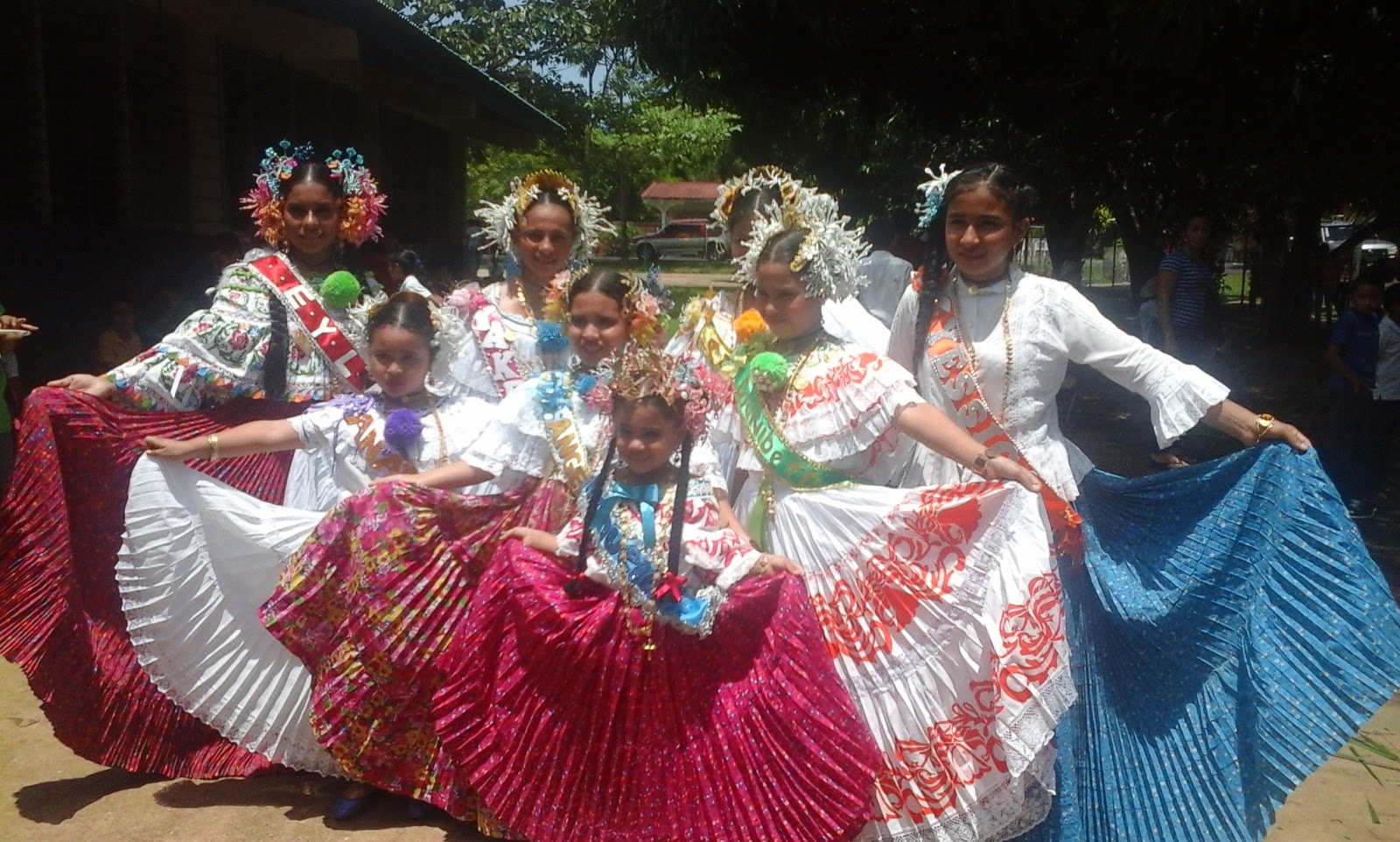
The despedida was really fun.  The LCFs (Language and Cultural Facilitators) brought a bunch of tipico clothes for us to borrow for the party.  I ended up wearing a beautiful blue montun (a skirt that is simpler than a polleron) and red tambleques (beautiful beaded flowers that women wear in their hair for celebrations). 

Then it was time for the great battle of fitting all the things I’d accumulated (notebooks and papers and clothes and supplies) into the luggage I initially brought with me.  I won in the end, but my hiking backpack was insanely stuffed and really, really heavy.

Week 10 
All of G76 returned to Ciudad del Saber to stay in the really swanky dorms.  We spent the week finishing up training sessions and other administrative things before swear in that Thursday.  I also had to have that infected wisdom tooth taken out, but due to magic (and probably some mad orthodontic surgeon skills) I never felt any pain and I was absolutely fine by the evening of the day of the procedure. 

The Swearing in Ceremony was really nice.  The training staff came to celebrate with us and the Country Director for Panama, representatives from ANAM and MEDUCA, and one of the US Embassy officers all made remarks.  Two of the trainees from G76 ((one CEC and one TE) also made speeches and it was really moving to hear them speak so eloquently about the craziness of training and our collective hopes for our two years of service.  After Swearing In we had a brief brindis (literally translates to “toast”, but in Panama usually looks more like tapas-style food and chicha—really sweet juice) before we started our weekend of celebrating.  G76 decided to stay in hostels in Panama City to celebrate there together for a few days before heading to our sites.


That brings us to present day.  I just finished moving to site!  More (hopefully) regular updates to follow!

All of my photo-taking technology wasn't functioning well for the majority of training, but please enjoy these cell phone shots from the past few days:

Catedral in Casco Viejeo

Cinta Costera

Gazebo in the Plaza next to the Cathedral

View from a Hammock

A (Wholly Incomplete) Summary of the Events of the Past 10 Weeks: Part 1

So, I've been pretty bad at this blogging thing...and the power just went out.

When I was doing research before I came to Panama I was frustrated by the lack of information I found about volunteers' perspectives on training in the blogs I was reading. I now understand that it’s because you’re constantly busy between classes, traveling to training events in other places, and making friends with the other crazy people (read: "trainees" or "new family members") who decided to step into this pressure cooker-wormhole-tornado (and you have very little internet access on top of that).

Honestly, it felt a lot like three months of college freshman orientation, but with more alphabet soup acronyms and Spanglish.

I've decided to attempt to remedy this perceived lack of information with a quick summary of the first ten (really eleven) weeks of my life in Panama.

Here we go:

Week 0
G76 arrived in Panama and stayed in the super swanky dorms (Hot showers, consistent water and electricity, Wifi, and access to a food court where you can buy shwarma for $6) near the Peace Corps office in Ciudad del Saber (CDS). CDS is the former Clayton military base that the US used when they had control over the Panama Canal. It's now the site of many homes, schools, and office buildings. We spend every day in training sessions (like lectures) from 8am-5pm on Peace Corps policies and Panama and Security and Health. We have an oral language placement exam. I stop being able to sleep past 6am, a phenomenon that hasn’t happened since high school. Dinamicas (like ice breaker/energizer games but on steroids) are introduced into our lives and we will never be the same.

Weeks 1-2
The TE (Teaching English) and CEC (Community Environmental Conservation) groups moved to their respective training communities to live with host families for the remainder of our training. Each Aspirante (trainee) lives with a different host family in the small community of Santa Rita. We have Spanish Class for 4 hours in the morning and Tech Class for TE-Specfic things for 4 hours in the afternoon. We spend one day in the Peace Corps office each week with the full group of TE and CEC to do general training, security, and health sessions. During week 2 we were assigned a group mock SECNA presentation. SECNA is the presentation (and paper) that we give to our communities after three months of observations to plan what kinds of initial projects community members are interested in collaborating on. It’s a big project, but if you do it little by little it’s totally manageable (which was the point of the mock SECNA).

Week 3


We each went to visit a current volunteer. I visited Taylor in the province of Herrera and we had a great time. It was really cool to see an example of real volunteer life and work and to feel more grounded in this crazy process (and to not eat any mayonnaise or rice all week). I loved seeing the school where she works and learning about other projects that are available outside of working in schools (organizing seminars, working with the Gender and Development group). We also celebrated my birthday with (a version of) baked ziti, garlic bread, and funfetti cake with chocolate frosting and then we watched a movie from Netflix on her computer. Probably one of the best birthdays ever.


Week 4-5

Back to class in the training community. During Week 4 we took another oral language exam to reassess our levels. I managed to move up two levels (!) and moved into another class. We also had interviews with our APCD for TE (my immediate supervisor) regarding our site placement preferences. He asked us a bunch of questions about what we thought about our volunteer visit and how training is going and our strengths and weaknesses with relation to our technical skills. At the end of the interview he asked for three things that we would look for in our sites (size, number of counterpart teachers, etc.). He humored my list of seven thoughts that I had scribbled down in my journal. Site placement was super nerve wracking because it is really important and you don’t have much (read: any) control over it. I tried not to think about it much because I didn’t want to stress myself out over something that I couldn't control. I wanted to trust in the PC staff to know what was best because I know about a teaspoon’s worth of what Panama is and what the communities are looking for.

We were also assigned a group community project where we were supposed to hold two one-hour community classes for members of the training community based on something that the community expressed interest in learning/doing. My group only managed to do about 20 minutes of one of those hours due to a series of unfortunate events.

There’s a phrase in Peace Corps/Panama (and maybe elsewhere) that people use a lot: “plus/delta”. It’s used for assessment of any given activities—what went well (+), and what could be improved for future implementations (delta). For my group’s community project we didn’t have many +’s, we really only had deltas (though I suppose delicious homemade cookies should always be counted as a +, no matter what else happens). It was a good learning experience on how to organize events better, communicate effectively, and to make sure you’re actually addressing something that the community has interest in learning (English slang didn't sell so well with the kids in the community, even when enticed with cookies).


To Be Continued...
My house in the Training Community

View from a Breakfast Table